What Golf Clubs Does a Beginner Actually Need?
You don't need 14 clubs to start golf. Here's the exact minimal set — driver, hybrid, a few irons, two wedges, and a putter — plus what to buy, what to skip, and how much to spend in 2026.
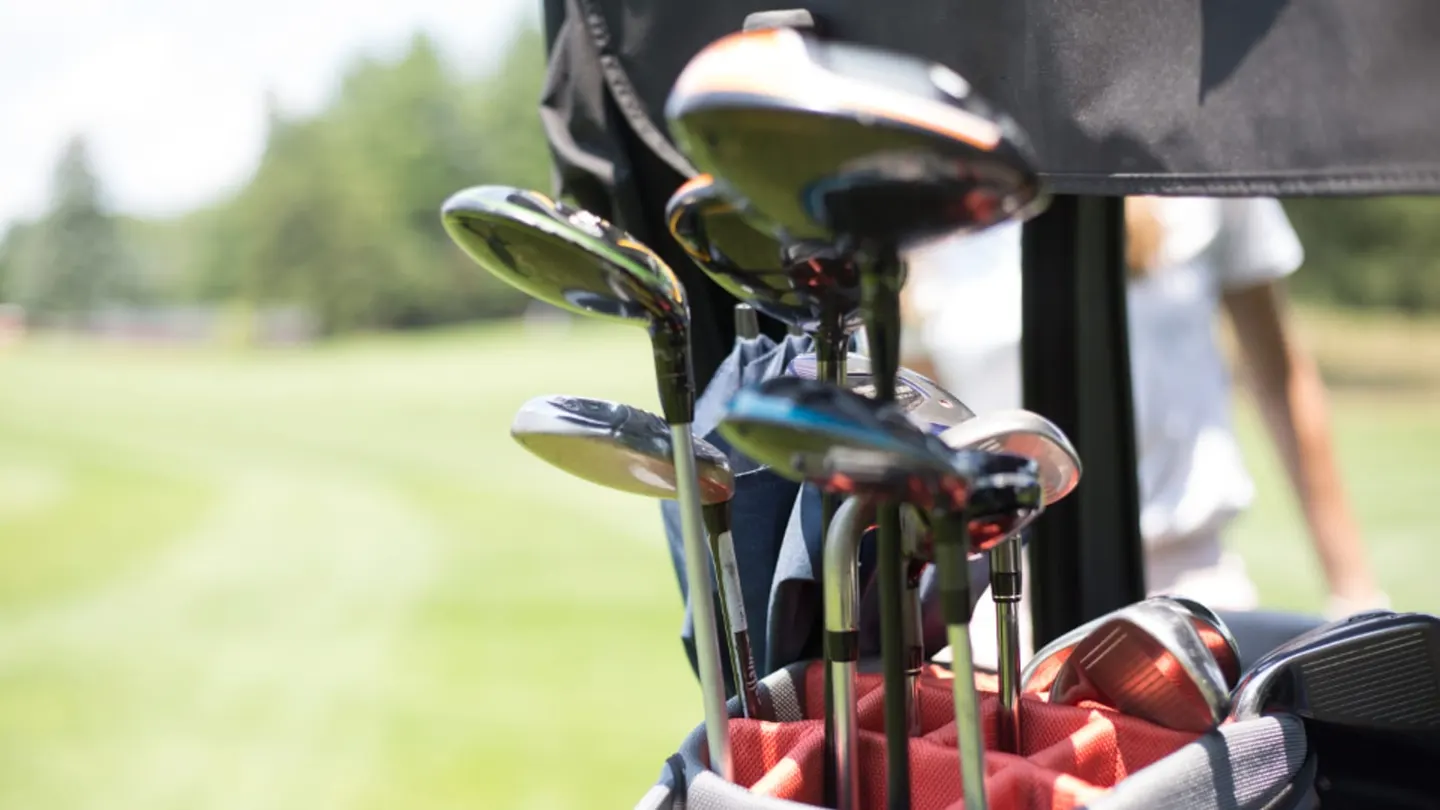
Photo by Kristin Hardwick via stocksnap (CC0 1.0)
If you have ever stood in a golf store staring at a wall of drivers, irons, wedges, and hybrids wondering what golf clubs a beginner actually needs, take a breath — the honest answer is far fewer than the industry wants to sell you. You can play good, enjoyable golf with about eight clubs, and starting with a smaller set will make you a better player faster.
Golf is booming right now. A record 48 million Americans played in 2025, and beginners — especially women and juniors — are the fastest-growing group in the game. Most of them are told they need a bulging 14-club bag on day one. They don't. This guide breaks down the minimal, affordable set that covers every shot you'll face, what each club does, what to buy, and what to skip.
The short version: start with a half set
The single most useful thing to understand is that the Rules of Golf cap you at 14 clubs but set no minimum. A "half set" of 7–9 well-chosen clubs is easier to learn with, lighter to carry, and cheaper — and it forces you to get creative, which is how you actually learn to control distance.
Here's the beginner set we recommend, and roughly how far each club goes for a new golfer with a moderate swing:
| Club | Typical beginner distance | What it's for |
|---|---|---|
| Driver | 180–220 yds | Tee shots on long holes |
| 5-wood or hybrid | 160–195 yds | Long approach shots, tight tee shots |
| 7 iron | 120–145 yds | Mid-range approach shots |
| 8 iron | 110–135 yds | Approach shots |
| 9 iron | 100–125 yds | Short approaches |
| Pitching wedge (PW) | 90–115 yds | Full short shots, chips |
| Sand wedge (SW) | 60–90 yds | Bunkers, pitches, chips |
| Putter | — | Rolling the ball on the green |
That's eight clubs. Add a second hybrid or a 6 iron later if you want, and you're still well under the limit. If you want the deeper rationale on the 14-club rule and what a full bag looks like, see our guide to how many clubs are allowed in a golf bag.
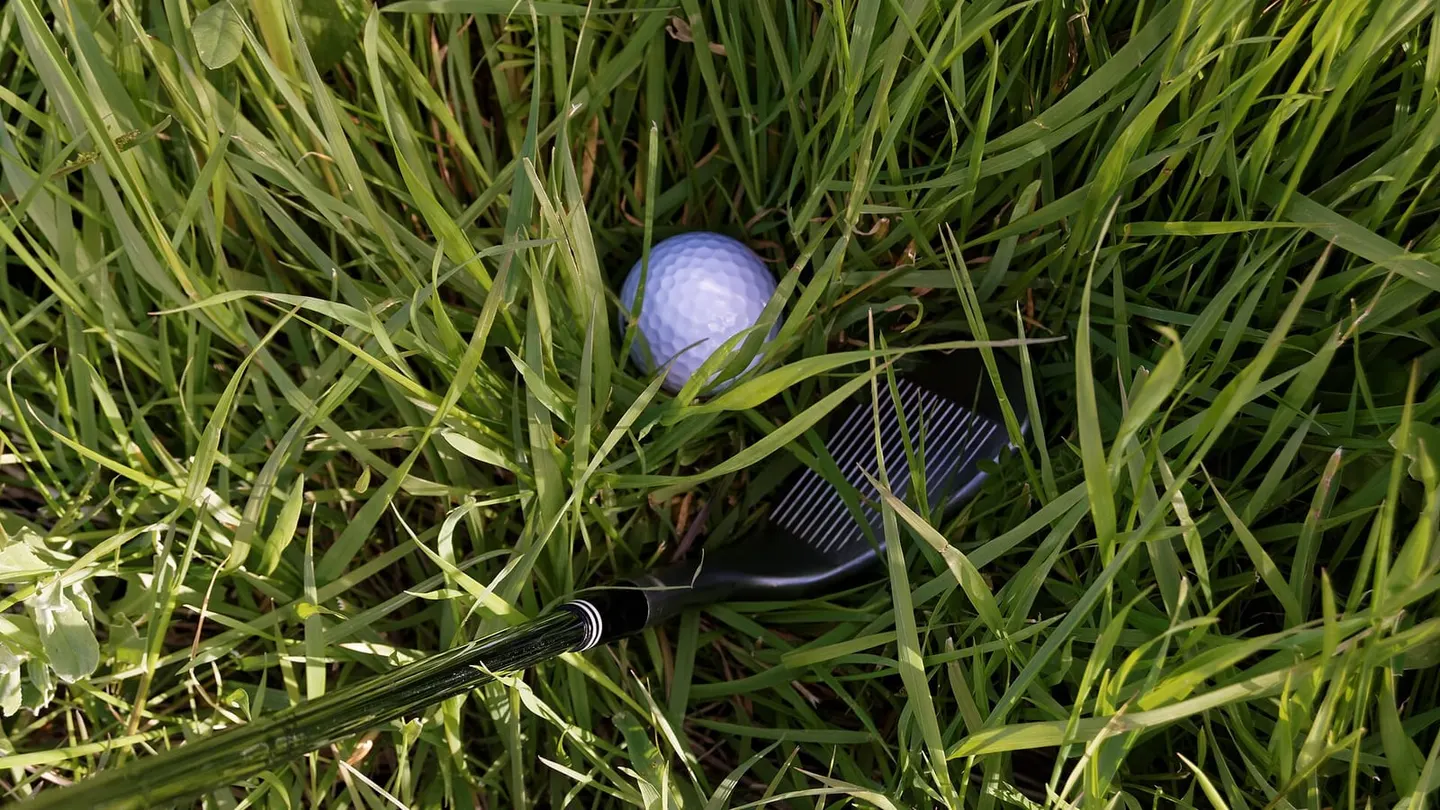 Photo by 27707 via Wikimedia Commons (CC0)
The clubs you actually need, explained
The driver (the biggest, most forgiving club)
The driver hits the ball the farthest and is used off the tee on longer holes. Beginners are often scared of it, and that's fair — it's the hardest club to hit consistently because it has the least loft and the longest shaft. But modern drivers are enormous, forgiving, and built to help.
What to look for: a 460cc head (the maximum legal size), a lightweight shaft, and higher loft — 10.5° or even 12°. More loft is easier to launch and actually reduces side-spin, so your slices and hooks curve less. Do not buy a low-loft "tour" driver.
Beginner tip: if the driver terrifies you, it's completely fine to tee off with your 5-wood or hybrid for your first few months. Keeping the ball in play beats an extra 20 yards in the trees every time.
One long club: a fairway wood or hybrid
You need exactly one club to cover the gap between your driver and your irons — roughly 170–200 yards. You have two options:
- A fairway wood (a 5-wood is far easier than a 3-wood) — great off the tee and off the fairway.
- A hybrid (also called a "rescue") — a cross between a wood and an iron, with a low center of gravity that makes it the single most forgiving long club in golf.
For most beginners, a hybrid is the friendliest choice. If you can only carry one long club, make it a 4- or 5-hybrid.
Irons: carry the short ones, skip the long ones
Long irons (2, 3, 4) are notoriously hard to hit and have no place in a beginner's bag — that's what hybrids are for. Start with a 7, 8, 9, and pitching wedge. These are your "scoring irons," the ones you'll use most on approach shots.
Buy cavity-back, game-improvement irons, which have a hollowed-out back that pushes weight to the perimeter for forgiveness on mishits. Avoid "blades" or "players irons" entirely — they look cool and punish everyone who isn't a low-handicapper.
Wedges and the putter: where scores are actually saved
Here's the stat that changes how people think about equipment: nearly half of all your shots happen on or around the green. That's why the two most valuable clubs in a beginner's bag are the ones that cost the least attention.
- Pitching wedge (PW): usually comes with your iron set. Used for full short shots and basic chips.
- Sand wedge (SW, ~56°): essential for bunkers and softer pitch shots. If you buy one wedge beyond the PW, make it a sand wedge.
- Putter: you'll use it more than any other club — around 40% of your strokes. A mallet-style putter is more forgiving and easier to aim than a thin blade putter, which is why we recommend it for every beginner.
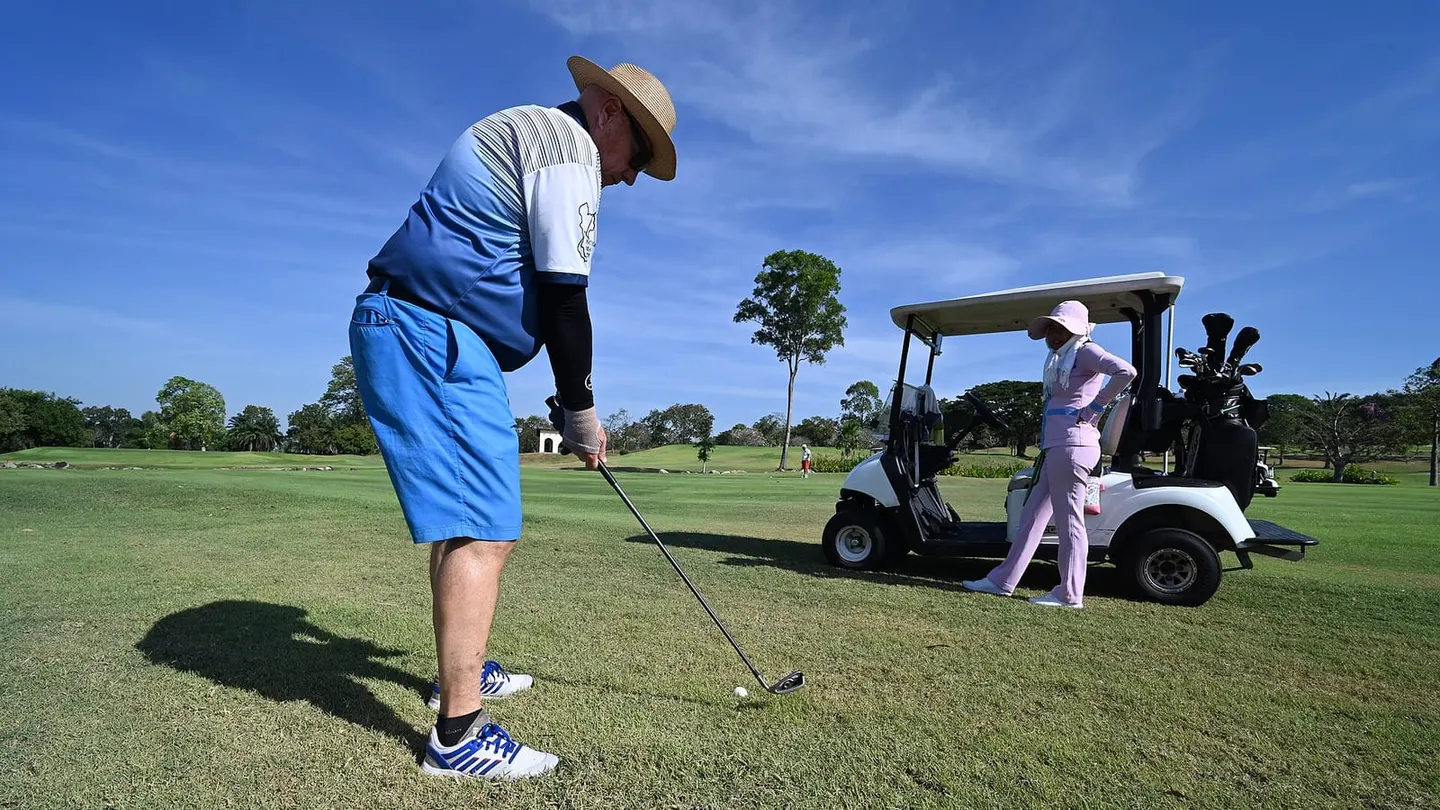 Photo by PattayaPatrol via Wikimedia Commons (CC BY-SA 4.0)
Should you buy a boxed set, used clubs, or piece it together?
For virtually every new golfer, the answer is a boxed beginner set — a complete, matched set (driver, wood/hybrid, irons, wedge, putter, and a bag) sold together for $200–$400. Brands like Callaway Strata, Wilson, and others build these specifically for beginners, and they include everything on the list above.
Here's how the three paths compare:
| Option | Typical cost | Best for |
|---|---|---|
| Boxed beginner set | $200–$400 | Almost everyone starting out |
| Quality used clubs | $150–$500 | Bargain hunters willing to shop |
| Piecing together new | $600–$1,500+ | Committed players after year one |
Buy new premium gear later. Your swing will change dramatically in your first year, so expensive clubs fitted to today's swing won't fit tomorrow's. Put the savings into lessons — a few sessions with a PGA professional will do more for your scores than any driver on the market.
Do you need to get "fitted" for clubs?
Not yet. A full custom fitting is worth it once you have a repeatable swing, but as a beginner you only need to get two basics roughly right:
- Shaft flex: if your swing is slower or smoother, a regular or senior/lightweight flex will help you launch the ball. Only fast swingers need stiff shafts.
- Length and lie: standard length works for most adults between about 5'4" and 6'2". If you're outside that range, ask a shop about longer or shorter clubs.
That's it. Don't let anyone upsell you into a $300 fitting before you've broken 100.
What you can skip (for now)
Beginners waste money on clubs they can't use yet. Leave these out of your first bag:
- Long irons (2, 3, 4) — replace with hybrids.
- A lob wedge (60°) — hard to hit; add it later once your short game develops.
- A 3-wood — a 5-wood or hybrid is far more forgiving.
- Blade/"players" irons — punishing and unnecessary.
- A second driver or "mini driver" — pure gadgetry at this stage.
A quick word on the rest of the bag
Clubs aren't the only thing you need, but they're the big decision. You'll also want a dozen soft, low-compression balls (perfect for slower swings), a handful of tees, a glove, and comfortable shoes. We break down every cost — including green fees and range balls — in how much it costs to start playing golf in 2026.
Putting it together
If you remember nothing else: start small, buy a boxed set, and spend the savings on lessons and range time. A beginner with eight well-chosen clubs and a coach will out-improve a beginner with a $2,000 bag every single time.
Once your clubs are sorted, learn the unwritten rules of the course in our golf etiquette guide for new golfers, get familiar with the lingo in our golf terms glossary, and then build a real plan to break 100 for the first time. Welcome to the game — it's going to be a fun ride.
Frequently asked questions
- Do I need a full 14-club set to start golf?
- No. The Rules of Golf allow a maximum of 14 clubs, but they set no minimum. Beginners learn faster and score better with a reduced 7–9 club set because there are fewer decisions and each club gets more reps.
- Should I buy new or used golf clubs as a beginner?
- For your first year, a boxed beginner set or quality used clubs are ideal. Spend the money you save on lessons and range balls — those lower your scores far more than premium equipment ever will.
- What is the most important club for a beginner to have?
- The putter and a wedge. Roughly 45% of your shots in a round happen on or around the green, so short-game clubs deliver the biggest score improvement per dollar.
- How much should a beginner spend on golf clubs?
- Plan on $200–$400 for a complete boxed set including a bag. You do not need a $600 driver or a premium iron set until you can consistently break 90.
- Are game-improvement irons better for beginners?
- Yes. Cavity-back, game-improvement irons have a low center of gravity and a wide sole that get the ball airborne and forgive off-center hits — exactly what a new golfer needs. Avoid blades entirely.
- Do I need a 3-wood, 5-wood, or hybrids?
- Pick one long-game club beyond the driver. A 5-wood or a 4/5-hybrid is far easier to hit than a 3-wood and covers your 180–210 yard shots. Hybrids are the friendliest option for most beginners.
Keep reading

How to Break 100 for the First Time: A Step-by-Step Plan
Breaking 100 in golf isn't about hitting perfect shots — it's about avoiding disasters. Here's the exact bogey-golf strategy, hole-by-hole plan, and practice priorities to shoot 99 or better.
June 20, 2026
Golf Etiquette: 20 Rules Every New Golfer Should Know
The unwritten rules of golf etiquette — pace of play, safety, where to stand, caring for the course, and dress code. Learn the 20 essentials before your first round so you play with confidence.
June 12, 2026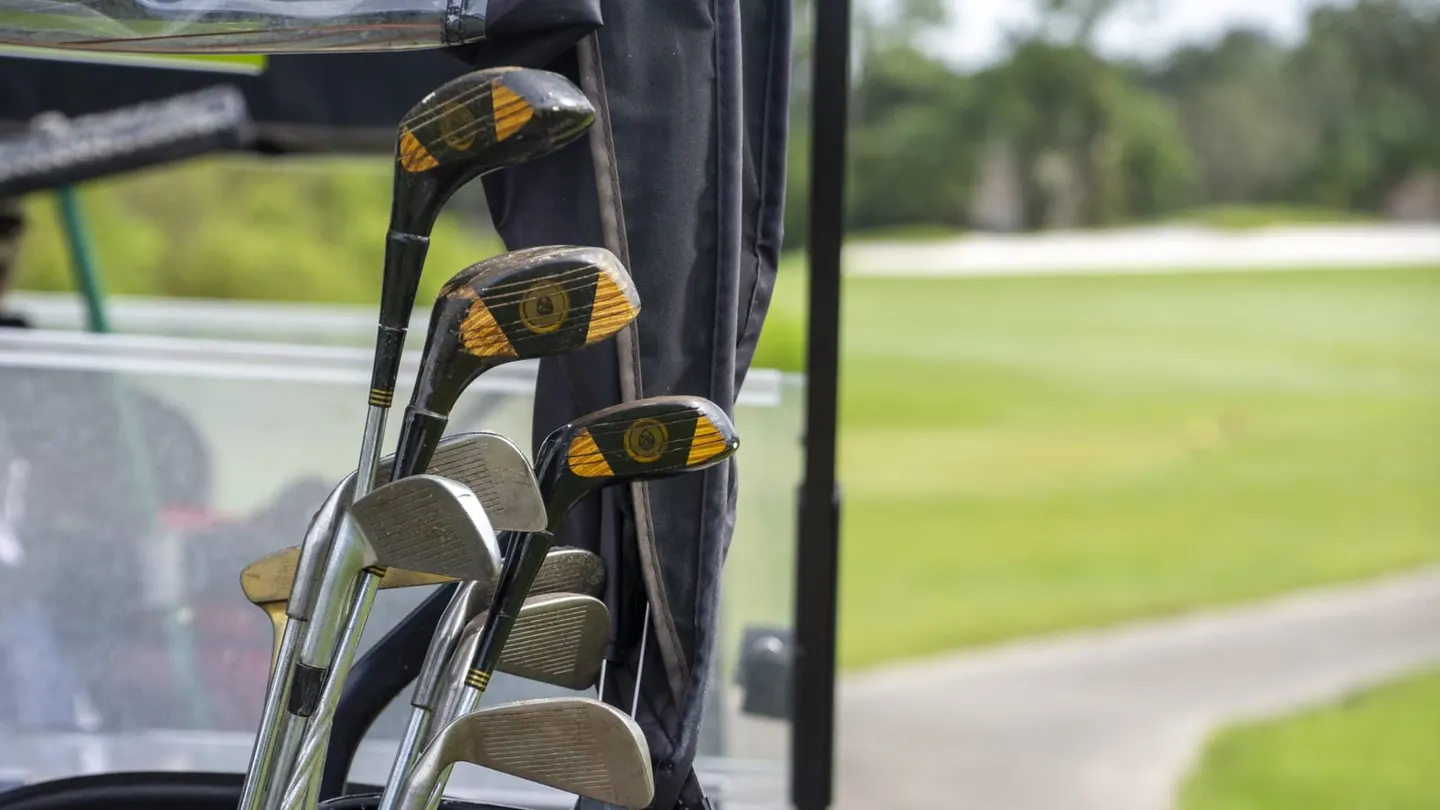
How Many Clubs Are Allowed in a Golf Bag? (And What to Carry)
The Rules of Golf allow a maximum of 14 clubs in your bag — with no minimum. Here's the exact rule, the penalty for carrying too many, a typical 14-club setup, and what beginners should actually carry.
June 5, 2026
Get better at golf, one email at a time
Join the newsletter for new beginner guides, honest gear reviews, and tips that actually lower your scores. No spam, ever.